Inventory Management:
The Complete Guide
Stay ahead of the competition
Introduction
Inventory management is the process of ordering, storing, tracking and controlling stock throughout its lifecycle. Effective inventory management helps businesses reduce costs, improve cash flow and ensure products are available when customers need them.
Inventory is one of the largest investments many businesses make. Whether you’re storing raw materials, finished products, spare parts or consumables, poor inventory management can quickly lead to wasted money, frustrated customers and lost sales.
Effective inventory management ensures that the right products are available in the right quantities, at the right time, while minimising storage costs and reducing waste.
Modern inventory management is no longer about spreadsheets and manual stocktakes. Businesses now use barcode scanning, real-time stock visibility, automation and intelligent reporting to improve accuracy and increase efficiency.
This guide explains everything you need to know about inventory management, including the different valuation methods, warehouse strategies, stock control techniques and technologies used by successful organisations.
Table of Contents
- What is Inventory Management?
- Why Inventory Management Matters
- Types of Inventory
- Inventory Management Methods
- FIFO vs LIFO
- Stock Valuation
- ABC Analysis
- Cycle Counting
- Barcode Systems
- Warehouse Layout
- Safety Stock
- Reorder Levels
- Batch Tracking
- Lot Traceability
- Serial Number Tracking
- Dead Stock
- Stocktakes
- Inventory KPIs
- Choosing Inventory Management Software
- Frequently Asked Questions
What is Inventory Management
Inventory management is the process of ordering, storing, tracking and controlling a company’s stock throughout its lifecycle. Whether a business holds raw materials, components, work-in-progress items or finished products, effective inventory management ensures that the right products are available at the right time while keeping storage costs and waste to a minimum.
For many businesses, inventory represents one of their largest investments. Poor inventory management can lead to stock shortages, overstocking, unnecessary purchasing, wasted warehouse space and dissatisfied customers. By maintaining accurate inventory records and using proven stock control methods, organisations can improve cash flow, increase operational efficiency and provide a better customer experience.
Modern inventory management goes far beyond simply counting items on warehouse shelves. Businesses now use barcode scanning, mobile devices, automation and cloud-based inventory management software like birdy to monitor stock levels in real time. Every movement of inventory, from goods being received into the warehouse, transferred between locations, picked for customer orders or dispatched for delivery can be recorded instantly, providing complete visibility across the supply chain.
Effective inventory management also supports better decision-making. By analysing historical sales data, seasonal demand and supplier lead times, businesses can determine when products should be reordered and how much stock they should hold. This reduces the risk of tying up valuable capital in excess inventory while ensuring popular products remain available when customers need them.
There are several different inventory management techniques that organisations use depending on their industry and requirements. Methods such as FIFO (First In, First Out), ABC Analysis, cycle counting and safety stock calculations all help businesses optimise stock levels and improve inventory accuracy. Manufacturers may also use batch tracking or serial number tracking to maintain complete traceability throughout the production process, while retailers often rely on automated replenishment systems to keep shelves stocked efficiently.
Technology plays an increasingly important role in inventory management. Cloud-based inventory management systems like birdy enable businesses to track stock across multiple warehouses, monitor inventory movements in real time and automate many repetitive tasks. Features such as barcode scanning, purchase order management, stock adjustments, inventory reporting and low-stock alerts help reduce manual administration while improving accuracy and productivity.
Ultimately, effective inventory management is about balancing customer demand with operational efficiency. Businesses that invest in robust inventory management processes are better equipped to reduce costs, improve profitability and scale their operations with confidence.
In the following sections of this guide, we’ll explore the key concepts, techniques and best practices that underpin successful inventory management, including FIFO vs LIFO, stock valuation, ABC Analysis, barcode systems, warehouse layout, safety stock, batch tracking and much more. Whether you’re managing a small storeroom or a multi-site warehouse operation, understanding these principles will help you build a more efficient and resilient inventory management strategy.
Why Inventory Management Matters
Inventory is more than just stock on a shelf. It impacts almost every area of your business. Effective inventory management drives profitability, improves customer experience and creates a stronger more resilient operation
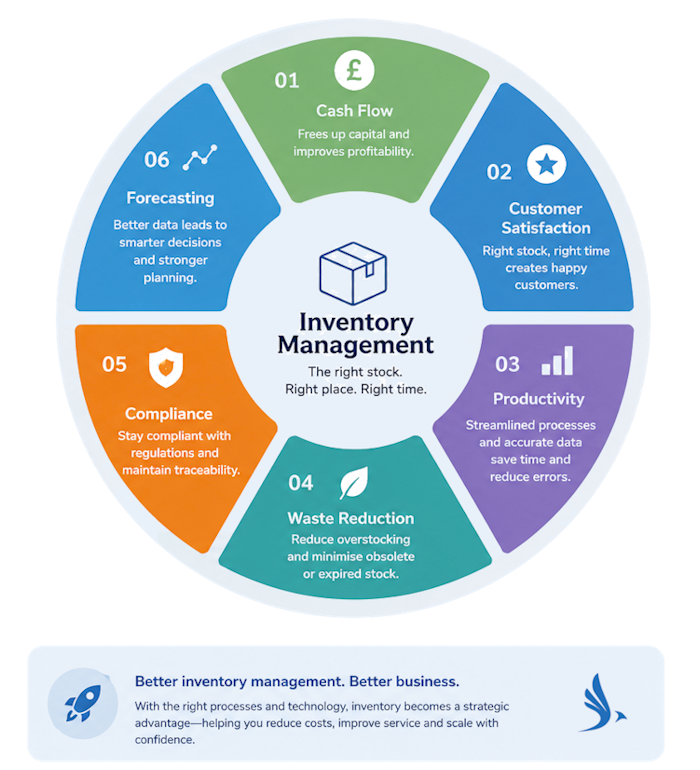
- Cash Flow
Inventory ties up working capital. Holding too much stock means that cash is sitting on a shelf instead of being used to grow your business. Holding too little can lead to emergency purchasing at higher coss. The right balance improves cash flow and profitability. - Customer Satisfaction
Having the right stock available when customers need it leads to faster fulfilment, fewer backorders and happier customers. Consistent availability builds trust and encourages repeat business. - Productivity
Accurate inventory data, streamlined processes and real-time visibility reduce manual work and errors. Your team spends less time searching for stock or fixing mistakes and more time on valuable activities. - Waste Reduction
Poor inventory control leads to obsolete, damaged or expired stock. Effective inventory management helps you identify slow-moving items early, reduce overstocking and minimise waste. - Compliance
Many industries have strict regulations around traceability, safety, labelling and reporting. Good inventory management ensures you meet these requirements and stay audit ready. - Forecasting
Accurate inventory data helps you analyse trends, predict demand and plan ahead. Better forecasting leads to smarter purchasing, better stock availability and improved results.
Types of Inventory
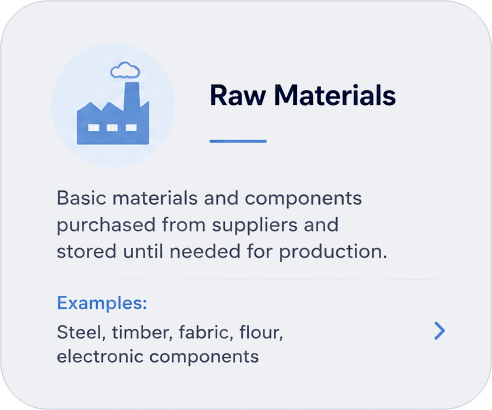
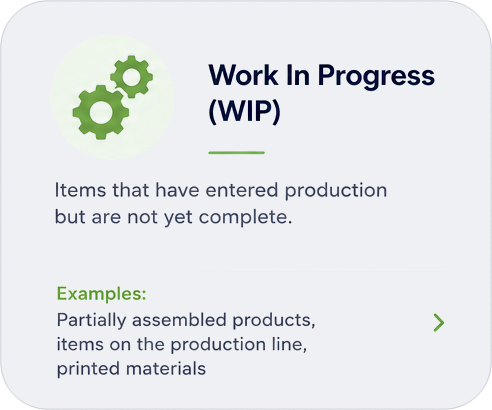
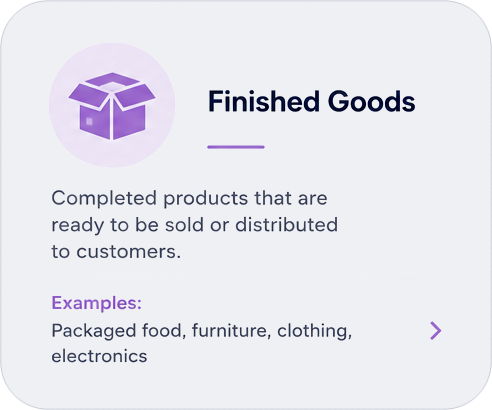
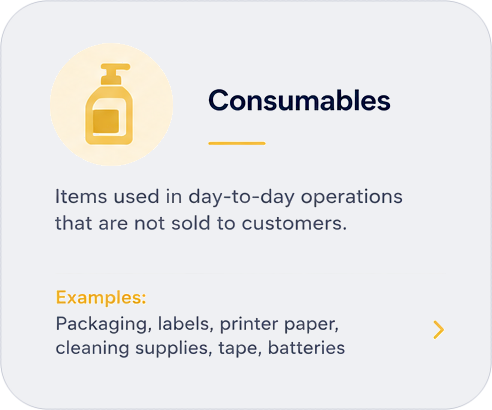
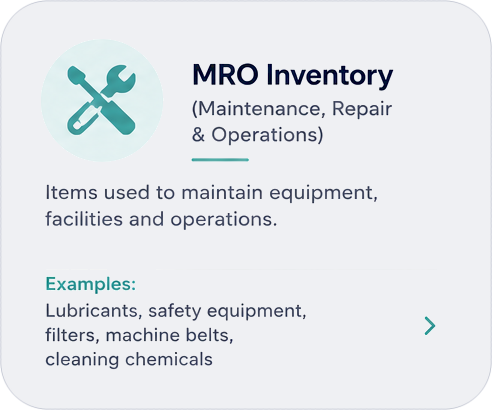
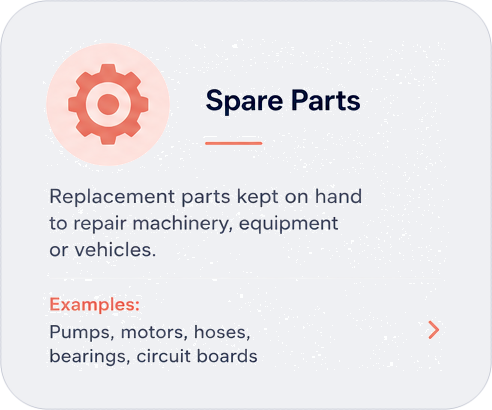
Every business holds inventory for different reasons. Here are the six main types of inventory most organisations manage.
How Birdy Helps
Birdy enables businesses to manage every type of inventory from a single platform. Whether you’re tracking raw materials, finished goods, consumables or spare parts, Birdy provides real-time stock visibility, barcode scanning, batch and serial number tracking, multi-location inventory management and intelligent reporting to help keep your operations running smoothly.
Inventory Management Methods
There is no single approach to inventory management that works for every business. The most effective method depends on factors such as your industry, the products you sell, customer demand and how your supply chain operates.
Inventory management methods are designed to help businesses maintain the right balance between having enough stock to meet customer demand while avoiding excessive inventory that ties up cash and valuable warehouse space. Choosing the right method can improve stock accuracy, reduce waste and increase profitability.
Some methods focus on the order in which inventory is issued, while others concentrate on forecasting demand, reducing storage costs or ensuring products remain fresh and traceable. Many organisations combine several inventory management techniques to create a strategy that suits their operational requirements.
Some of the most commonly used inventory management methods include:
FIFO (First In, First Out)
FIFO assumes that the oldest inventory should be sold or used first. It is widely used by businesses handling perishable goods, food, pharmaceuticals and products with expiry dates.
LIFO (Last In, First Out)
LIFO assumes that the most recently purchased inventory is used first. Although less common internationally and not permitted under some accounting standards, it remains an important inventory valuation method to understand.
FEFO (First Expired, First Out)
FEFO prioritises inventory based on expiry dates rather than purchase dates. It is commonly used in healthcare, food manufacturing and pharmaceutical industries where product safety is critical.
Just-in-Time (JIT)
JIT aims to minimise inventory by receiving goods only when they are required. This reduces storage costs but requires highly reliable suppliers and accurate demand forecasting.
Economic Order Quantity (EOQ)
EOQ is a mathematical model that calculates the ideal quantity of inventory to purchase in order to minimise ordering and storage costs.
Min/Max Inventory
The Min/Max method defines minimum and maximum stock levels for each product. When inventory falls below the minimum level, new stock is automatically ordered until the maximum level is reached.
Kanban
Kanban is a visual inventory management system that signals when stock needs replenishing. Originally developed by Toyota, it is widely used in lean manufacturing environments.
No single method is suitable for every organisation. Many businesses combine multiple techniques—for example, using FIFO alongside Min/Max replenishment and barcode scanning—to achieve accurate, efficient inventory control.
How Birdy Helps
Choosing the right inventory management method is only part of the solution. To apply these methods successfully, businesses need accurate, real-time visibility of their stock and the ability to automate routine inventory processes.
Birdy’s Inventory Management module helps businesses implement proven inventory management methods by providing real-time stock visibility across multiple warehouses and locations. Whether you’re using FIFO, batch tracking, serial number tracking or automated reorder levels, Birdy keeps your inventory accurate and up to date.
With barcode scanning, purchase order management, stock movements, inventory adjustments and comprehensive reporting, Birdy enables your team to manage inventory efficiently from goods received through to dispatch. Intelligent alerts help prevent stock shortages and overstocking, while detailed reporting provides the insights needed to improve purchasing decisions and optimise stock levels.
By combining modern inventory management techniques with powerful automation, Birdy helps businesses reduce manual administration, improve stock accuracy and maintain complete control over their inventory.
Key Features
- ✓ Real-time inventory visibility
- ✓ FIFO and batch stock management
- ✓ Barcode scanning and mobile stock control
- ✓ Multi-warehouse inventory management
- ✓ Automated reorder alerts
- ✓ Purchase order management
- ✓ Batch and serial number tracking
- ✓ Inventory reporting and analytics
- ✓ Stock adjustments and transfers
- ✓ Complete inventory audit trail